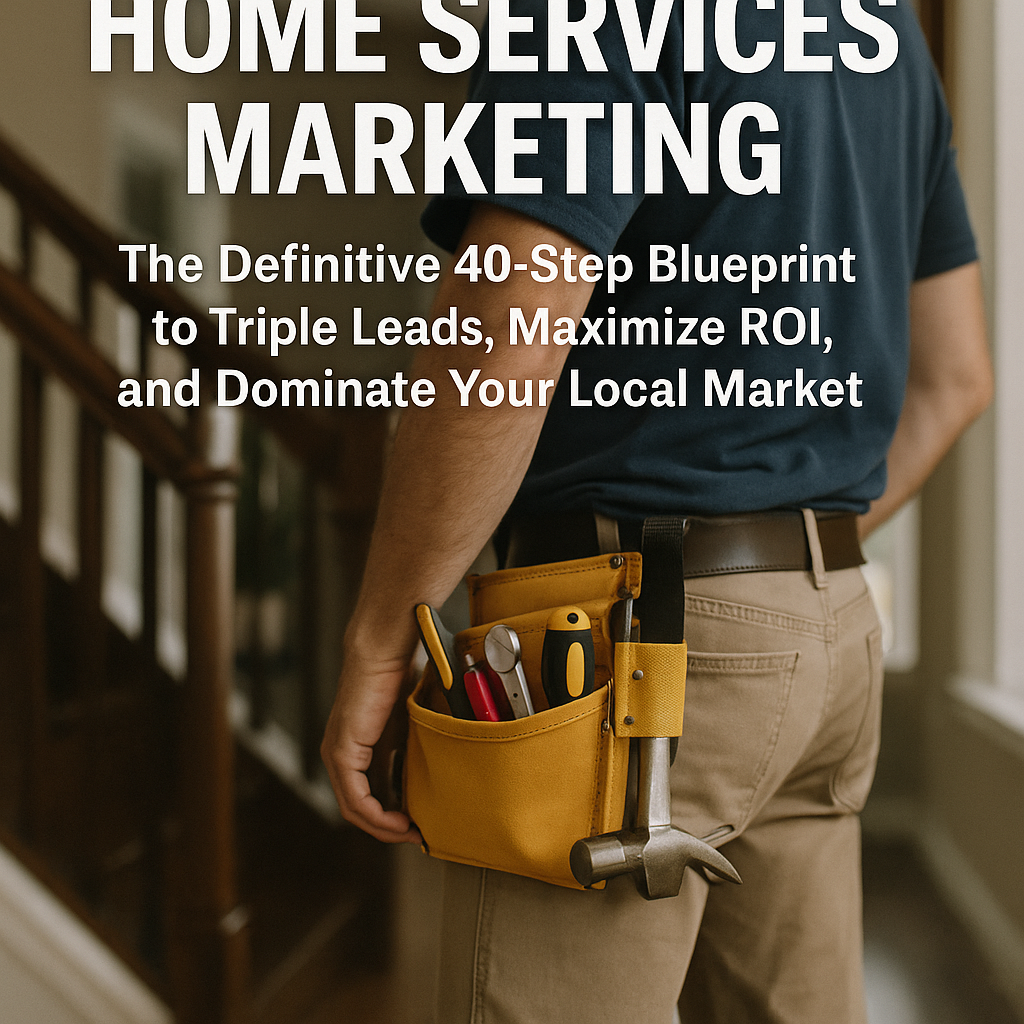
Stop guessing and start scaling—your 2026 home services marketing playbook has finally arrived.
Why 2026 Is the Break-Out Year for Home Services Marketing
Consumer behavior has shifted—again. Voice search queries like “AC tune-up near me right now” are exploding, Google’s AI Overviews are pushing organic links further down the page, and TikTok clips of leaky faucets are racking up millions of views. The contractors who adapt will book calls while everyone else refreshes their inbox hoping for leads that never show. If you want to triple service calls, maximize ad ROI, and become the obvious local choice, you need a systemized, data-driven home services marketing strategy—one that covers every touchpoint from map pack to inbox to doorstep.
Below is the definitive 40-step blueprint used by HVAC Marketing Xperts (HMX) to grow hundreds of HVAC, plumbing, and electrical contractors nationwide. Follow it exactly—or shortcut the grind by letting the specialists do the heavy lifting. ”
The 40-Step Blueprint to Dominate Your Local Market
Phase 1 – Market Intelligence & Positioning (Steps 1-7)
1. Conduct a Hyper-Local SERP Autopsy
Open an incognito window, spoof your GPS location to the center of your service area, and audit the entire first page for “your service + city.” Take screenshots of every ad, Google Business Profile (GBP) listing, People Also Ask box, and top-ranking organic page. Log ad copy, review counts, schema types, and core web vitals. These details become your playbook’s raw material.
2. Map Real Search Intent with Entity SEO Tools
Feed the keywords into NLP tools like GPT-4, Surfer, or NeuronWriter to uncover entities Google expects—think “SEER rating,” “coil cleaning,” or “blower motor.” Bobby Gillespie, HMX’s Head SEO Strategist, routinely surfaces 300+ micro-topics per city that competitors overlook. The payoff? Pages that read naturally yet satisfy Google’s language model.
3. Spy on Competitor Ad Budgets
Use Ad Transparency Center, Semrush, and SpyFu to estimate daily spend. Note which CTAs (“Schedule in 60 Seconds,” “Same-Day Repair”) consistently appear; they’re tested winners you can riff on.
4. Interview Your CSRs
The folks answering phones know exactly which promos, seasons, and pains convert. Bake their language into landing pages and Facebook ad creative.
5. Secret-Shop Top Competitors
Book a $59 tune-up, photograph technician uniforms, and document their on-site sales process. You’ll uncover upsell scripts, service bundles, and warranty angles that resonate locally.
6. Build a Unique Promise Only You Can Keep
Example: “Diagnose & Repair Heat Pumps in 120 Minutes or the Service Is Free.” Put it in every meta title, postcard, and van wrap.
7. Define Your North-Star KPI
Leads are vanity unless they turn into booked jobs. Track cost-per-OPTY (estimate issued) or cost-per-install instead. HMX clients monitor dashboards that pull call recordings, ServiceTitan revenue, and GA4 campaign data into one source of truth.
Phase 2 – Digital Foundation & Local Authority (Steps 8-20)
8. Rebuild Your Website Around Conversions—not Awards
If your homepage doesn’t load in <2 seconds LCP, you’re bleeding ad budget. HMX’s websites for HVAC focus on mobile-first layouts, sticky “Call Now” buttons, and heat-mapped trust badges for a 12-18 % lift in form fills.
9. Install Call-Tracking & Dynamic Number Swapping
Assign unique numbers to each traffic source: GBP, Google Ads, LSAs, Facebook, and email. Dynamic swap scripts tie every ring to keyword and ad group, eliminating “I think PPC is working” guesses.
10. Engineer 45 Service-Area Pages with Entity Schema
Each city page should feature NAP info, embedded review JSON-LD, and FAQPage schema addressing real queries: “Do I need a permit to replace my furnace in Aurora, CO?” Internal link to the flagship HVAC SEO guide for topical depth.
11. Claim & Maximize All GBPs
Multi-location contractors? Create distinct profiles, add UTM-tagged website URLs, and schedule geo-tagged photo uploads weekly. Request reviews 15 minutes after service with QR codes displayed on the tech’s tablet.
12. Publish Two “Money Blog Hubs” per Month
Cluster content like “Heat Pump 101” → “Mini-Split Tax Credits 2026” → “How to Fix a Frozen Coil at 2 a.m.” Link them together. Need inspiration? Swipe ideas from our massive list of HVAC blog topics.
13. Launch HVAC-Specific Schema Automations
Include Service schema, Offer schema for discounts, and VideoObject schema for install demos. Google’s NLP gives preferential treatment to structured data it can parse quickly.
14. Optimize Core Web Vitals
Compress images, lazy-load hero videos, switch to HTTP/2. HMX sites routinely score 90+ on mobile PageSpeed, a key ranking factor for “emergency plumber” midnight searches.
15. Secure 30 Niche Citations & Industry Links
Submit to ACCA, PHCC, HomeAdvisor profile (yes, even if you don’t buy their leads), and local chamber directories. Diversified anchors like “Aurora hot water heater repair” appear natural to Google.
16. Drip Local Press Releases Quarterly
Highlight scholarships, charity furnace installs, or new warehouse openings. The backlink plus authority mention nudges your E-E-A-T scores upward.
17. Syndicate Engaging Social Proof Videos
Turn 30-second customer thank-you clips into reels, Shorts, and YouTube posts. Embed one on every service page to lift conversions by 8-10 %.
18. Embed Educational Playlists
Add our playlist from https://www.youtube.com/@hvacmarketingxperts to answer common homeowner questions and keep visitors on-page longer—a positive dwell-time signal.
19. Automate Review Generation
Integrate HVAC reputation management software that sends SMS review requests and auto-posts 4★+ feedback directly to your site. Respond to every review within 24 hours.
20. Deploy Web Stories for Visual SERP Real Estate
The carousel outranks traditional links. Showcase maintenance tips, before-and-afters, and seasonal promos.


Phase 3 – Traffic Acceleration & Lead Capture (Steps 21-32)
21. Build a 7-Layer Keyword Intent PPC Structure
Separate “emergency,” “install,” “maintenance,” and brand terms into single-theme ad groups. Use HMX’s free HVAC keyword list to seed campaigns.
22. Geo-Fence by ZIP + Radius for Higher Ad Relevance
Set stricter radii at rush hour to avoid technicians stuck in traffic eating your profit margin.
23. Craft Swipable Facebook Lead Ads
The thumb-friendly cards in our HVAC Facebook Ads service generate sub-$25 cost-per-lead when paired with instant appointment booking.
24. Layer On Retargeting
Visitors abandoned a quote form? Hit them with display ads featuring testimonials. Our HVAC retargeting ads reclaim up to 18 % of lost traffic.
25. Pilot YouTube Shorts Ads for Seasonal Spikes
15-second “Furnace Not Lighting?” spots show before competitor pre-rolls. Cost-per-view averages $0.05—cheaper than coffee.
26. Spin Up Google Local Service Ads (LSAs)
Get background-checked, upload license, collect five initial reviews, and set a $50 bid cap. Use call-tracking to dispute low-quality leads.
27. Weaponize Email Automations
Drip estimates not closed within seven days. Include a “Tap to Call” button and a $100 installer rebate. Need templates? See our HVAC email marketing guide.
28. Capture Financing Leads with 0 % APR Landing Pages
Embed pre-qualify forms from lenders like GreenSky. Customers spend 28 % more when financing is frictionless.
29. A/B Test Landing Page Elements Weekly
Headline, hero image, and testimonial order. Use Hotjar scroll maps to spot drop-off in long forms.
30. Offer Chat-to-Call Handoff
Live chat converts 38 % higher than static forms. HMX scripts route high-intent chats directly to dispatch.
31. Stack Coupon-Based Exit Popups
When the user moves toward the back button, fire a 10 % off code. Track incremental revenue—not vanity clicks.
32. Sync CRMs with GA4 Conversions
Pipe closed-won revenue back to ad platforms to train algorithms on real profit, not just form fills.
Phase 4 – Optimization, Expansion & Moat Building (Steps 33-40)
33. Deploy Predictive AI Bid Strategies
Feed 90 days of conversion data into Google Ads’ tROAS. Beware: throttle budgets for seven days to avoid learning-phase churn.
34. Scale Content to Neighboring Cities
Clone high-performing city pages, rewrite intros, swap ZIPs, and update driving-directions schema. Don’t forget localized reviews.
35. Partner with Complementary Trades
Cross-promote with roofers or solar installers. Their email list + your winter promo = new revenue stream.
36. Launch Authority PR & Podcast Tours
Book guest spots on shows featured in our HVAC podcast directory. Backlink + credibility in one swing.
37. Create a Customer Loyalty Program
Offer priority dispatch, extended warranties, and annual check-ups. Market via SMS; 98 % open rates beat email’s 20 % any day.
38. Build Niche Micro-Sites for High-Ticket Installs
URL ideas: “ColoradosHeatPumpPros.com.” Funnel traffic directly to finance applications.
39. Monitor Emerging Channels Weekly
Keep an eye on Nextdoor ads, Instagram Reels shopping tags, and AI-powered Google Home voice bookings.
40. Conduct Quarterly Growth Sprints
Gather marketing, dispatch, and sales every 90 days. Review KPI dashboards, brainstorm experiments, assign owners, and lock in deadlines.
Putting It All Together (Without Burning Out Your Team)
Forty steps sound daunting—because they are if you juggle installs, payroll, and warranty claims. That’s why contractors nationwide delegate the heavy lifting to HVAC Marketing Xperts. From killer HVAC lead generation funnels to conversion-obsessed web builds and transparent pricing (see packages), we execute every tactic above while you focus on what you do best: keeping homes comfortable and customers happy.
Ready to triple leads and dominate your zip code? Book a free 30-minute strategy call. We’ll reverse-engineer your competitors, hand you custom data audits, and outline a step-by-step action plan—for free. ”
No more guesswork, no more shared leads—just predictable growth backed by hard data.
Mastering Home Services Marketing: FAQs From Real Communities
How can I generate quality leads for my home services business without relying solely on word-of-mouth?
Start by claiming and optimizing your Google Business Profile so you appear in the local “map pack.” Pair that with location-targeted Google Ads and a simple on-site lead form that captures name, phone, service type, and preferred time. Finally, nurture contacts with quick text or email follow-ups—speed is critical because most homeowners choose the first responsive company.
What digital channels give the best ROI for plumbers, electricians, and HVAC contractors?
Homeowners usually search in moments of need, so intent-based platforms outperform broad awareness tactics.
- Local SEO (Google Business Profile + service-area pages) for organic, trust-building visibility.
- PPC on Google and Bing for “emergency + service” keywords—track calls and form fills to measure cost per booked job.
- Branded retargeting ads on Facebook and Instagram to stay top-of-mind with site visitors who didn’t convert the first time.
How much should I budget for paid ads in a competitive metro area?
A practical rule of thumb is to invest 7–10% of monthly revenue if you’re in growth mode. For example, an HVAC firm bringing in $100K per month should dedicate $7K–$10K to PPC. Adjust up or down based on average job value and seasonality; track cost per lead and cost per acquisition weekly so you can reallocate funds in real time.
What’s the fastest way to earn more 5-star reviews and improve online reputation?
Train technicians to ask for feedback at the job site while the homeowner is still excited about the finished work. Use an automated follow-up system that texts a direct review link within 30 minutes of job completion. Respond publicly to every review—positive or negative—within 24 hours to show future customers you’re attentive and transparent.
Is social media really worth it for home service companies?
Yes, but treat each platform differently. Facebook neighborhood groups and Instagram Stories are great for showcasing before-and-after projects and seasonal promotions, whereas TikTok and YouTube “how-to” clips position you as an expert and drive SEO value. Post consistently, geo-tag content, and engage with local community pages to amplify reach without paying for every impression.