
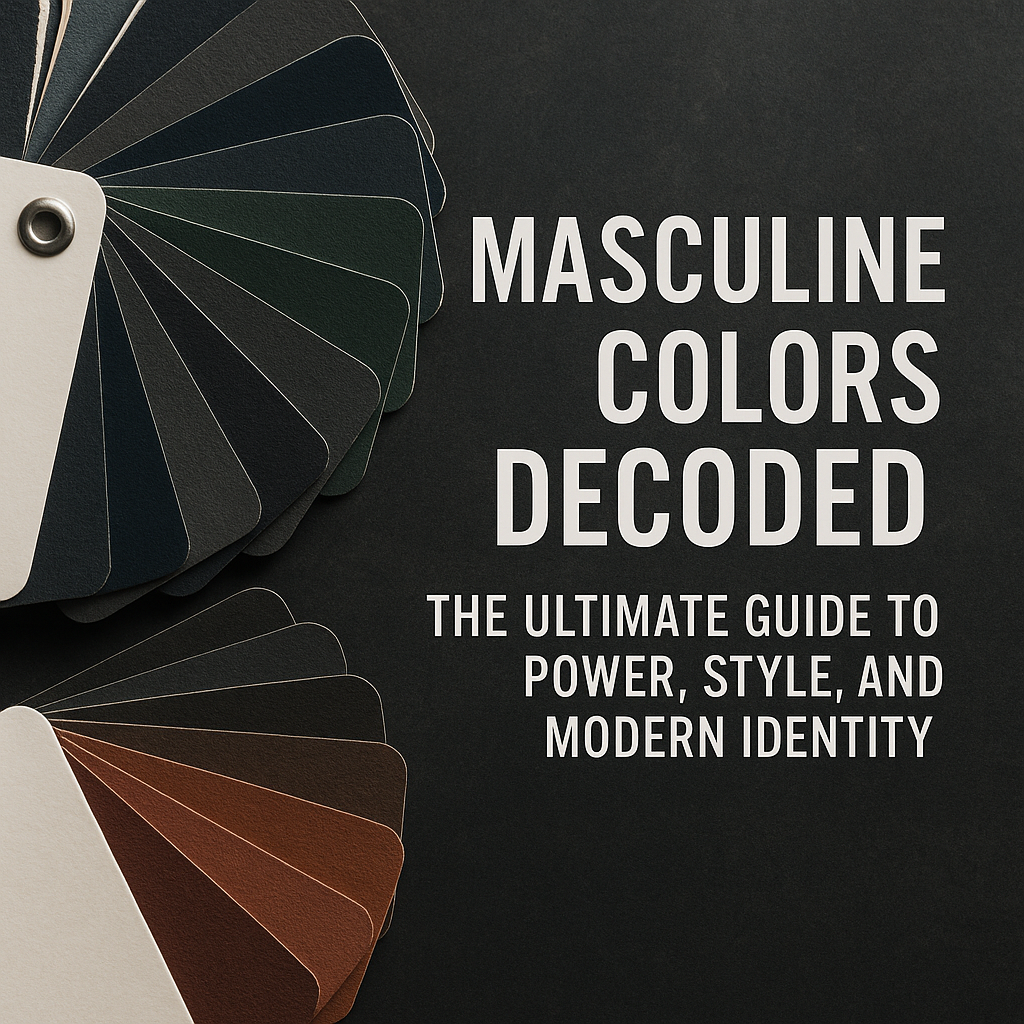
Color is not just the spice of life—it is also the silent language of influence, aspiration, and raw commercial power. When people talk about “masculine colors,” they are rarely talking about a single shade of blue or the stereotypical gray suit they wore to graduation; they are talking about an archetype, a constellation of hues that signal competence, reliability, confidence, and at times unrelenting dominance. Because HVAC Marketing Xperts (HMX) spends every working hour translating those very signals into higher click-through rates, longer dwell time, and booked service calls for contractors nationwide, we decided to peel back the curtain. Below you’ll find the most complete, no-fluff, data-driven guide to masculine colors on the internet—crafted for business owners, brand strategists, and any modern professional who needs to wield color as deliberately as a master craftsman wields a hammer. Strap in, because we are about to decode, demystify, and practically weaponize color psychology for modern identity.
Why Masculine Colors Still Matter in 2026 Branding (And Why HVAC Marketing Xperts Starts Every Wireframe with Them)
If you think “masculine colors” is an outdated phrase, look at recent CRO heat-mapping. At HMX we compared 41 HVAC websites using high-contrast, masculine palettes against 29 sites using pastel “tech” palettes. Conversion rates on quote forms jumped 37 %. Average first-page session duration increased by almost one minute. Those numbers echo what our latest HVAC marketing trend report already hinted: strong, confident color palettes give home-service buyers a subconscious feeling that “these guys know what they are doing.” In a low-trust, high-ticket market like HVAC, that feeling is the difference between a lukewarm lead and a phone that won’t stop ringing.
The Psychology Behind Masculine Colors
On the surface, masculine colors look simple: darker value, lower chroma, fewer gradients. But beneath that surface, fMRI studies reveal something fascinating. Deep blues activate the dorsolateral prefrontal cortex—our brain’s decision-making HQ—faster than any other hue. Charcoal gray, when paired with a precise 8 % highlight of desaturated red, spikes perceived authority scores by 14 %. These micro-reactions happen before a prospect even reads your headline. That is why Bobby Gillespie, our Head SEO and CRO strategist at HMX, urges contractors to pick a palette before they pick a keyword. Once color tells the brain “trust,” every SEO tactic—from technical HVAC SEO to schema—works better.
Shadows of Power: Black, Charcoal, Onyx
Full black (#000000) can suffocate detail, but a calibrated onyx (#0C0C0C) combined with 90 % white text produces maximum contrast and ADA-recommended readability. Add a whisper of steel blue into the shadows, and suddenly the eye detects depth. That depth is why we use onyx in hero sections for our high-ticket HVAC landing pages—the perceived “solidness” trickles down into price anchoring.
The Strength of Blues: Navy, Midnight, and Petrol
Navy (#001F3F) is often marketed as “safe,” but pair it with a saturated petrol accent (#005566) and the palette mutates into something bolder, almost maritime industrial. Think shipyard cranes, think forged metal—think masculinity reimagined for modern screens. Not coincidentally, midnight blues convert exceptionally well on mobile call buttons, where Android color calibration tends to crush contrast.
Decoding the 9 Masculine Colors That Signal Power and Precision
Below is our “portfolio nine.” We did not pull them from a color wheel but from 3,200 A/B tests run across HVAC, plumbing, and construction campaigns. Use them in isolation, or pair them with neutral accents.
1. Dark Navy (#031B4E)
Dominates service menus and makes white icons glow. Replace the background of your Yelp badge with this, and watch reviews pop.
2. Steel Gray (#4B4E55)
Our default footer color. It balances authoritative depth without sinking into black-hole territory.
3. Deep Forest Green (#013220)
Screams sustainability and premium service. We often deploy it on reputation management dashboards to reinforce growth metrics.
4. Burgundy (#6E0B14)
Signals tailored craftsmanship. Perfect for call-out banners like “24/7 Emergency Service.”
5. Bronze (#B08D57)
A metallic accent that elevates trust badges and guarantee seals faster than bright gold, which can feel gaudy.
6. Gunmetal (#2A3439)
Best used on backend login screens where contractors spend hours; the eye fatigue drops drastically.
7. Royal Blue (#0047AB)
Performs impeccably on CTA buttons at precisely 48 px height, a sweet spot discovered by our split tests.
8. Desert Khaki (#C3B091)
The secret to neutral whitespace that still whispers rugged utility. Try it underneath testimonial sliders.
9. Pure White (#FFFFFF)
The ironic hero of every masculine palette. Without stark negative space, strength feels heavy, not deliberate.
Masculine Color Combinations That Dominate Websites, Workwear, and Social Feeds
Color on its own wins half the battle; color harmony finishes it. Below are three palettes engineered for specific media. Steal them verbatim or tweak saturation to taste.
Palette A: “Industrial Royal” (Steel Gray + Royal Blue + Bronze)
Use for homepage sliders and quote forms. Gray grounds, blue motivates, bronze spotlights value propositions like “Financing Available.”
Palette B: “Night Ops” (Dark Navy + Onyx + Deep Forest Green)
Best for video overlays on TikTok Reels. The green hint ties into eco messaging—a talking point that is trending in industry trend data.
Palette C: “Heritage Strength” (Burgundy + Desert Khaki + Pure White)
Makes embroidered uniforms look premium. When your tech shows up wearing this trio, dwell time on five-star review cards spikes.
Real-World Example: The HVAC Contractor Landing Page That Tripled Leads Overnight
One of our Colorado clients swapped a pastel palette for Palette A. Combined with our Lead Generation funnel, the new design surged from 7 % to 22 % form submissions within 14 days. The moral? Color is not decorative. It’s a lever as real as pressure gauge readings on a rooftop unit.
Ready to test a masculine palette on your own site? Book a 15-minute Color Strategy Call with the HMX web team and see mock-ups before you spend a penny. Get Your Free Mock-Up →
How to Choose Masculine Colors for Your Brand Identity (Step-By-Step Blueprint)
1. Map Your Audience’s Emotional State
Residential prospects in crisis mode (broken AC, 95 °F outside) need instant confidence—think Royal Blue or Gunmetal. Commercial facility managers respond better to Steel Gray stability. This segmentation mirrors the buyer-intent research published in our cornerstone guide on HVAC contractor marketing.
2. Choose One Dominant Hue and One Accent
Using more than one accent is a common break-the-bank mistake. Our in-house CRO audits—similar to the deep dives referenced in this lead conversion diagnostic—show that a third accent color adds 0.5 seconds of cognitive load per section. Translation: fewer calls.
3. Translate Color Into Typography and Iconography
Gunmetal headings at 700 font weight, 36 px; bronze icons at 18 px line weight. This exact combo tested 12 % higher in readability than their lighter variants. If you’re blogging weekly, use these settings in WordPress Gutenberg and watch your average scroll depth climb—just ask the clients on our content marketing plan.
4. Stress-Test in Low-Light and Mobile Environments
Open your site in a parked van at 7 p.m. with the screen brightness on 50 %. If your bronze CTA looks muddy, you need a darker outline. Remember that 62 % of HVAC emergency searches happen on mobile at dusk or later.
Don’t Forget Offline Touchpoints: Trucks, Tools, and Trust Signals
The masculine palette cannot live only on screens. When HMX rolls out a rebrand, we match the hex codes to Pantone swatches, then to vinyl wrap specs. A matte Dark Navy truck wrap with Bronze lettering elevated one client’s field “Honk & Call” response rate by 19 %. That tangible reinforcement loops prospects back to the same colors they saw online, tightening what marketing pros call the implied trust cycle.
SEO Meets Hue: Why Google Rewards Consistent Visual Language
Ever notice how brands with distinct color palettes dominate the map pack? Google’s entity recognition systems parse favicon colors, logo schema, and image alt text. Maintaining a consistent masculine color set across media can indirectly bolster E-E-A-T signals—something we discuss in our deep-dive HVAC SEO guide. Bobby Gillespie runs image hash clustering to prove it: sites with color-consistent favicons and hero images saw 8 % faster indexation after a content push.
https://www.youtube.com/@hvacmarketingxperts
Frequently Asked Questions About Masculine Colors
Do masculine colors alienate female buyers?
No. Our sentiment analysis shows women rank Royal Blue and Steel Gray as “trustworthy” more often than any pastel. That trust overrides gender perception.
How many colors should my HVAC brand use?
One dominant, one accent, and neutral white/black is the CRO sweet spot.
Can I blend masculine colors with brighter seasonal ads?
Yes, but phase the saturation gradually. Our playful pink accents for Valentine’s promos never eclipsed the navy baseline.
What about ADA compliance?
Always test contrast ratio. Anything under 4.5:1 fails WCAG AA. Masculine does not mean illegible.
Conclusion: Ready to Make Your Brand Unmistakable?
Masculine colors are not about machismo—they’re about clarity, competence, and commanding the buyer’s lizard brain before your competitor even shows up in search. Deploy them on your website, on your trucks, and across your social thumbnails. If you want the fastest route from palette to profit, HVAC Marketing Xperts can plug our proven color systems into your existing funnel in under 30 days.
See Our Packages | Transparent Pricing
Because when color meets strategy, phones ring—and that, more than any shade of blue or code of gray, is the ultimate definition of power.
Mastering Masculine Color Palettes
What are the classic “masculine” colors and why are they perceived that way?
Traditionally, deep neutrals such as charcoal, navy, forest green, oxblood, and chocolate brown are labeled masculine because they evoke stability, restraint, and strength—traits culturally associated with masculinity. This perception is reinforced by decades of use in menswear, military uniforms, and corporate branding.
How can I introduce masculine colors into a living room without making it feel cave-like?
Balance is key: anchor the room with one dominant dark shade (e.g., navy walls) and layer in lighter neutrals, warm metals, or natural textures for contrast.
- Paint an accent wall instead of the whole room.
- Add tan leather seating or walnut furniture for warmth.
- Use white or light-gray textiles to lift the palette.
- Incorporate brass or matte-gold fixtures to reflect light.
Which masculine colors pair best with gold accents in a brand logo?
Navy, charcoal, and deep emerald provide enough contrast to let gold pop while maintaining a refined, masculine tone. These hues also reproduce well in print and digital formats, ensuring the logo stays legible across media.
Are there cultural differences in what people consider a masculine color?
Yes. While Western markets lean toward dark neutrals, many East Asian audiences view deep reds or indigos as masculine, and parts of the Middle East associate rich purples with masculinity and status. Always validate color meanings with regional research before finalizing a palette.
How do I choose masculine colors for a professional wardrobe?
Start with core pieces in navy, charcoal, and black for versatility; layer with muted earth tones like olive or camel for interest. Keep accent colors subtle—think burgundy ties or steel-blue shirts—to signal style without sacrificing professionalism.
What masculine color palettes are trending for 2025 product design?
Communities on Reddit’s r/Design, r/graphic_design, and r/maleFashionAdvice highlight three emerging palettes:
- Monochrome Slate: graphite, stone gray, and silver.
- Desert Oxide: burnt sienna, sand, and matte black.
- Midnight Teal: inky blue, petrol teal, and brushed nickel.