
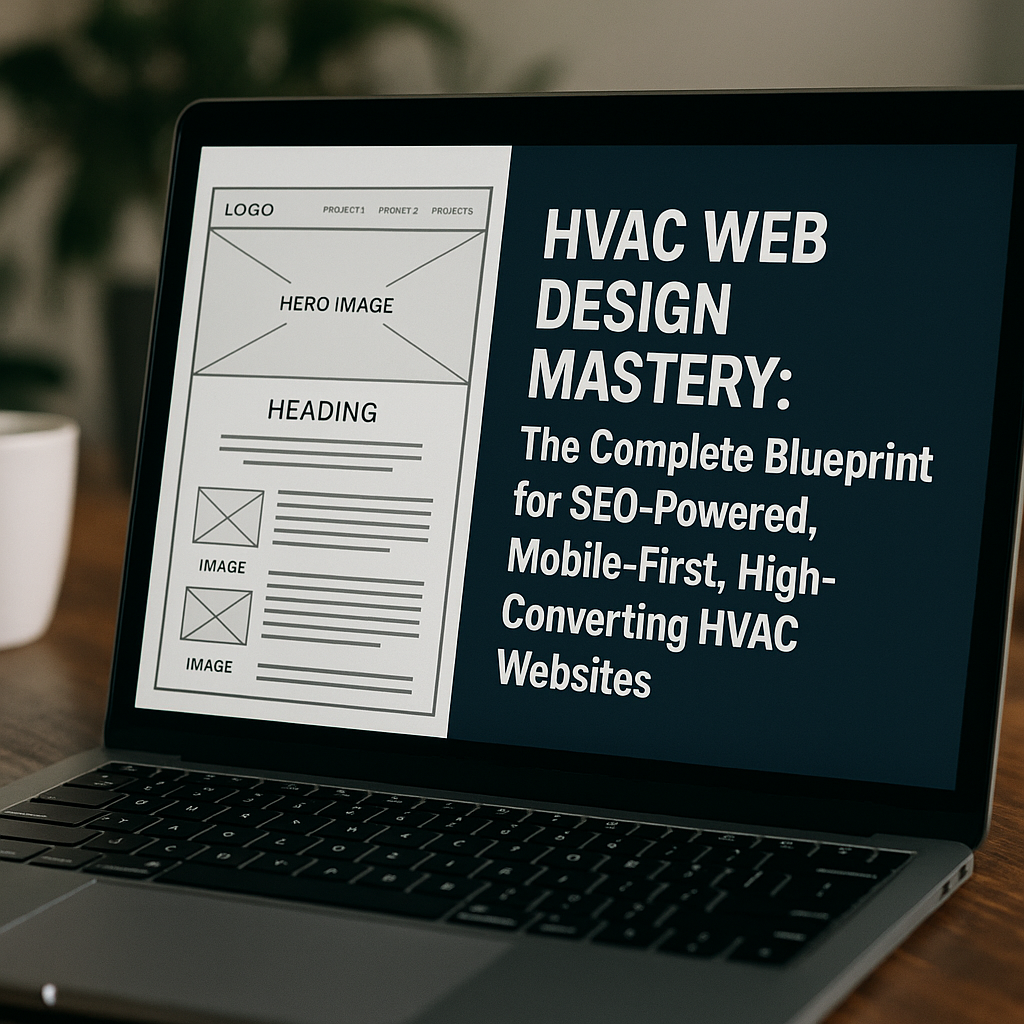
Picture this: the phone at your HVAC shop is ringing off the hook, your calendar is booked two weeks out, and every new appointment started the same way—“I found you on Google and loved your website.” In 2026, that scenario isn’t a fantasy. It’s exactly what happens when HVAC Marketing Xperts (HMX) architects an SEO-powered, mobile-first, high-converting hvac web design for contractors who are tired of treating their website like a digital brochure and finally want it to become a lead-generation powerhouse.
The Market Has Shifted—Has Your HVAC Website?
Over 70 % of homeowners now search, compare, and book HVAC services entirely on a smartphone. If your site still loads like dial-up or forces visitors to pinch-and-zoom just to find your phone number, you’re leaking revenue every single day. In the last year alone, we’ve watched Google reward contractors with lightning-fast, Core Web Vitals-friendly sites—while demoting those with clunky themes and thin content.
Translation? In 2026, hvac web design must fuse technical SEO, speed engineering, persuasive copy, and conversion psychology from day one. That’s exactly what HMX has packaged into our HVAC Website Design Services, a done-for-you blueprint that turns “digital brochure” sites into revenue engines.
The 5-Pillar Blueprint for HVAC Web Design Mastery
1. Turbocharged Performance & Core Web Vitals
Nothing decimates bounce rate like a slow site. Google’s latest data shows a 32 % increase in abandonment when page load climbs from one to three seconds—yikes. Our HMX dev team obsessively compresses images, implements HTTP/3 with QUIC, and pre-loads above-the-fold assets so your LCP (Largest Contentful Paint) hits sub-1.8 s across 4G. If you’ve been diving into our HVAC SEO Guide, you already know Google’s algorithm privileges speed as a ranking signal, but it’s also a human signal: fast load equals instant trust.
The Quick-Win Checklist
- Serve WebP images and enable browser-level caching (yes, even for that giant hero shot of your service fleet).
- Deploy critical CSS inlined; defer non-essential scripts.
- Leverage a premium CDN with edge workers for geo-redundant speed.
2. Mobile-First, Thumb-Friendly UX
Your prospects scroll with one thumb while balancing a toddler or wrestling with a faulty thermostat. Make every click effortless. At HMX we build progressive, stacked-column layouts that morph gracefully from 320 px to 1920 px. The phone number is click-to-call, anchored top-right. Sticky footer CTAs float at eye level so users never hunt for a contact button.
Want proof of concept? Check out some of the responsive elements we break down in our post on HVAC Website Design Ideas—notice how the best designs keep geo-terms, value props, and testimonials above the fold on mobile.
3. Entity-Rich, Revenue-Driving Content
Google’s NLP engine isn’t fooled by keyword stuffing anymore. Instead, it rewards websites that answer user intent with topical depth. That’s why our Content Marketing for HVAC program maps a cluster of entity-based pages (furnace installation, heat pump repair, ductless mini-split maintenance) to each service radius you want to own. Paired with our internal linking structure—think siloed topic hubs pointing to location pages—you get maximum topical authority and minimum crawl waste.
Blog Power-Ups That Rank & Convert
- Embed local keywords (e.g., “emergency AC repair in Knoxville”) in H2s—but lead with value, not fluff.
- Reference industry stats from our HVAC Marketing Trends & Stats article to build authority.
- Close each post with a decisive CTA to a service page—driving reader momentum down the funnel.
4. CRO Science: Turn Clicks into Scheduled Calls
A beautifully designed site without conversion rate optimization is like a perfectly tuned furnace without a thermostat—heat with no control. We integrate:
- Directional cues (arrows, micro-animations) steering eyes toward forms.
- Social proof widgets showcasing 4.9-star Google ratings managed through our HVAC Reputation Management service.
- Friction-free, two-step quote forms that capture the essentials—name, phone, urgency—then auto-push to ServiceTitan or Housecall Pro.
One Colorado client watched conversion rate jump from 2.1 % to 7.8 % in 14 days after HMX swapped a dead-zone sidebar form for a hero-section sticky bar and heat-map tested the CTA copy. Those are the micro-tweaks Bobby Gillespie, our Head SEO Strategist, lives for.
5. Local SEO & Schema Superpowers
Finally, the secret sauce: we bake JSON-LD schema directly into page templates—Organization, Service, Review, and FAQ markup—so Google can parse your NAP data, review count, and service coverage in milliseconds. Add geo-landing pages optimized for Map Pack intent (“AC tune-up near Fort Collins”) and you’ll siphon traffic from national franchises.
If you loved our deep dive on HVAC Local SEO, this is the blueprint brought to life, wrapped in pixel-perfect design.
From Wireframe to Wallet: The HMX Workflow
Contractors tell us, “I’m too busy in the field to babysit a website build.” Good. You shouldn’t have to. Our process is turnkey:
- Discovery & Competitive Gap Audit (free) — we crawl your site, analyze six competitors, and deliver a 17-page brief.
- Wireframe & Copywriting — UX architects draft page-flow; copywriters craft conversion-focused messaging.
- Design & Development — in Figma + Oxygen/Bricks for WordPress, lightning-fast and future-proof.
- SEO & CRO Layer — technical optimization, schema, internal linking, and A/B testing baked in.
- Launch & Lead-Gen Integration — connect with our HVAC Lead Generation Services or PPC funnels for immediate traffic spikes.
Bonus Assets That Amplify Your New Site
YouTube: Learn While You Grow
Not into reading 2,000-word guides every week? No worries. Our HVAC Marketing Xperts YouTube channel drops free, bite-sized tutorials on topics from “Landing Page Heat-Map Hacks” to “Facebook Ads Under $50/day.” Hit play, apply the tactic, watch the leads roll in.
https://www.youtube.com/@hvacmarketingxperts
Web Stories: Scroll-Stopping Micro-Content
Short on time but hungry for quick wins? Peek at the latest success snippets, trend alerts, and design wins right here:



Common HVAC Web Design Mistakes to Avoid in 2026
Some are obvious. Others lurk below the surface, quietly killing rankings and conversions.
- Using stock photos of generic technicians—Google’s image algorithm often sniffs these out, downgrading “authenticity trust.” Swap in geo-tagged team photos.
- Publishing a single “Services” page—better: a silo for each profit center. Need inspiration? See our niche-specific guide on Plumbing Website Design Ideas and copy the structure.
- Ignoring internal link equity—five orphaned blog posts won’t rank. Tie them into service hubs. Our post HVAC Blog Topic Ideas shows how to build content clusters that feed authority upward.
- Forgetting ADA & WCAG compliance—accessibility isn’t just ethical, it protects against lawsuits and may influence UX metrics.
Case Snapshot: 148 % Organic Growth in 90 Days
• Client: Mid-size HVAC contractor in Austin
• Challenge: Legacy theme, 5.4 s mobile load, 1.2 % conversion rate
• Solution: HMX full redesign + on-site schema + heat-pump content cluster
• Outcome: 148 % organic sessions, 321 booked jobs in Q1, $1.4 M projected annual lift
Curious? Tap the CTA below, claim your complimentary audit, and let’s discuss your numbers.
Your Next Step: Turn Website Browsers into Buyers
You can keep tweaking that 2017 theme, or you can deploy a 2026-ready hvac web design that crushes Core Web Vitals, owns the Map Pack, and compels prospects to call you—not the franchise down the street.
Book My FREE HVAC Website & SEO Audit »
Still on the fence? Dive into more resources:
• Struggling with lead quality? Read Why Most HVAC Leads Never Turn Into Paying Customers.
• Need a social strategy to pair with your new site? Check our HVAC Facebook Ads Guide.
• Curious about PPC budgets? Scan the numbers in HVAC Advertising Cost.
Bottom line: When you partner with HVAC Marketing Xperts, you get more than design. You get speed engineering, entity-first SEO, CRO wizardry, and marketing firepower under one roof. Stop guessing and start growing—your future customers are already searching for you.
Smart HVAC Web Design FAQs Every Contractor Should Know
How much does a custom HVAC website typically cost?
Budgets range from $3,000–$10,000 for most small-to-mid HVAC contractors, depending on page count, booking integrations and whether original copywriting or photography is needed. Enterprise multi-location brands can expect higher fees for custom functionality and ongoing support.
Which features matter most on an HVAC company’s website?
A high-converting HVAC site focuses on clear service information and friction-free booking. Core elements include:
- Click-to-call and online scheduling on every page
- Location-specific landing pages for service areas
- Financing and maintenance plan details
- Trust signals such as licenses, reviews and badges
- Fast, mobile-first performance for emergency users
How long does it take to design and launch an HVAC site?
Most agencies deliver a brochure-style HVAC site in 4–6 weeks, while larger builds with custom integrations and copywriting can run 8–12 weeks. Timelines shrink when you provide assets—logos, photos, service lists—up front and respond quickly to revision rounds.
Do I really need SEO if my HVAC business only serves a local area?
Yes. Local SEO (Google Business Profile optimization, location pages, and review generation) drives the “near me” searches homeowners use when systems break down. Without it, your site depends on paid ads alone, raising acquisition costs and throttling off-season leads.
Can my existing site be redesigned or should I start from scratch?
If your CMS is modern, loads quickly and meets current security standards, a strategic redesign—new layout, copy and conversions paths—may suffice. Older platforms lacking mobile responsiveness or plugin support are often cheaper to rebuild than to patch.
What common web mistakes keep HVAC contractors from winning leads?
Contractors often overlook simple conversion blockers:
- No visible phone number after the first scroll
- Slow load times caused by oversized imagery
- Generic stock photos that erode trust
- Missing service-area keywords in title tags
- Outdated coupons or expired promotions left online